Handling dark surfaces and through-holes
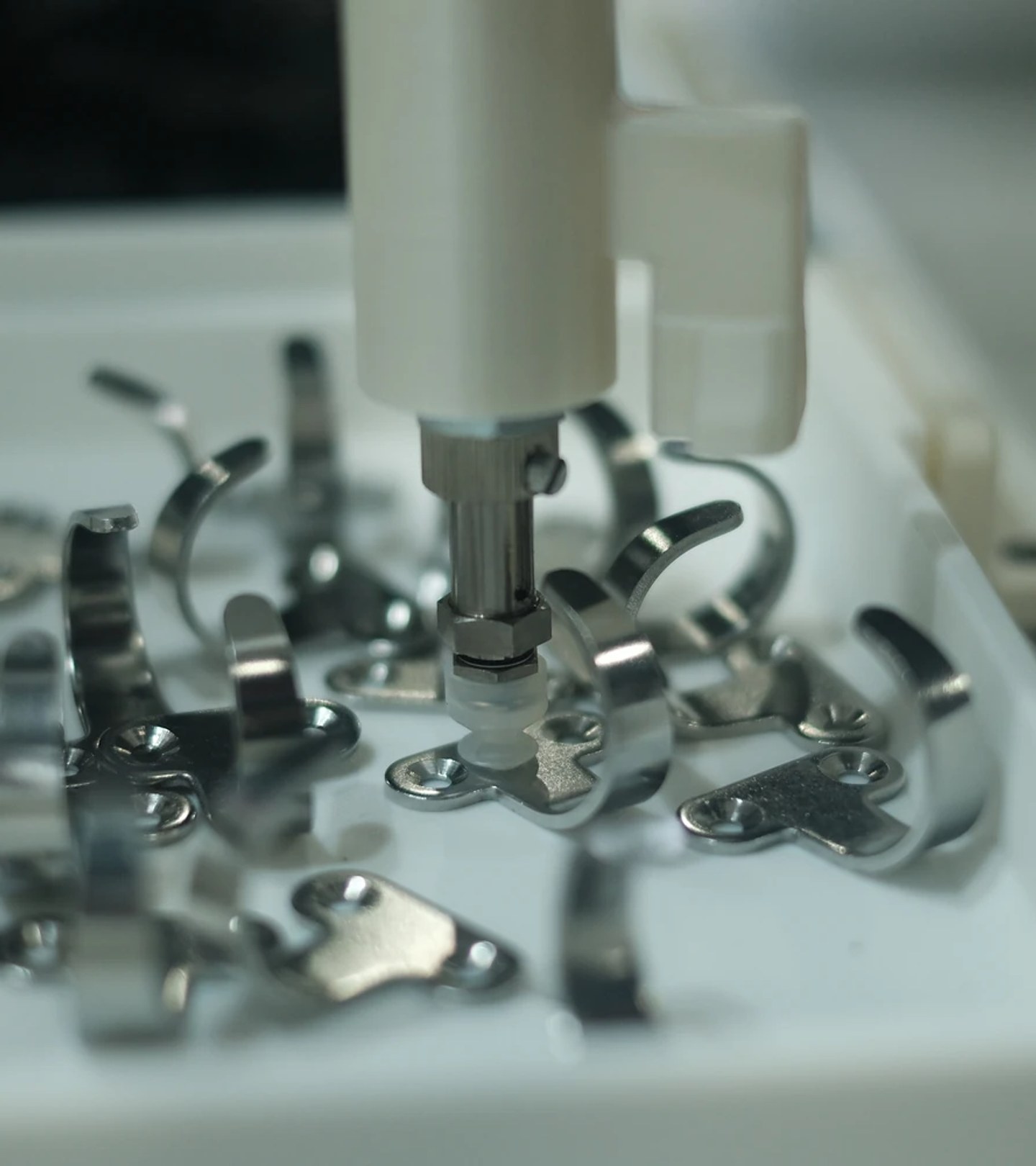
A large lawn and garden products manufacturer molds its own packaging. Parts fall from the molding press into a tote, where they overlap in different positions and orientations. Packing requires each part to be picked and stacked in a defined orientation, rather than dropped loose.
Matte black plastic returns little light to the camera, making point-cloud generation difficult. Through-holes create missing data, while flat faces offer few features for estimating pose. The suction cup also needs a solid surface to seal against.
From random piles to oriented stacks
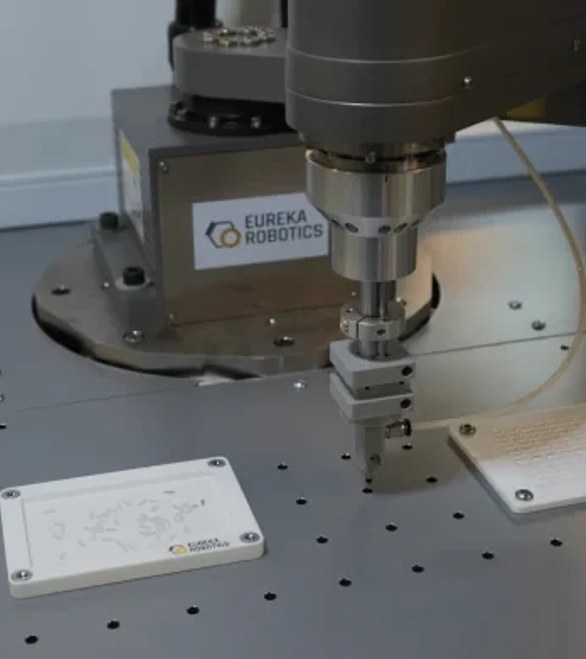
Mounted above the tote, the Eureka 3D Camera uses AI-based stereo to generate a point cloud without pattern projection or lengthy multi-exposure captures. The Eureka Controller identifies the parts, selects an accessible candidate and calculates a six-degree-of-freedom pick pose.
The UR5e grips at a point defined on the CAD model during training, away from the holes. Collision-avoiding path planning guides the robot as it rotates the part into the required orientation and builds a stack at the outfeed. A return conveyor recirculates the parts to the tote, allowing the setup to run continuously without an operator replenishing it.
Cycle time and part changes
The demonstrated cycle takes less than six seconds per part, including the stacking move. The customer’s own engineers can add a new part in a day using its CAD data, without photographing and annotating physical samples.