Skip to content
◆ AI-powered 3D vision

Eureka
3D Camera

Our range of AI Stereo Vision cameras designed for 3D picking delivers unmatched accuracy in challenging production conditions.
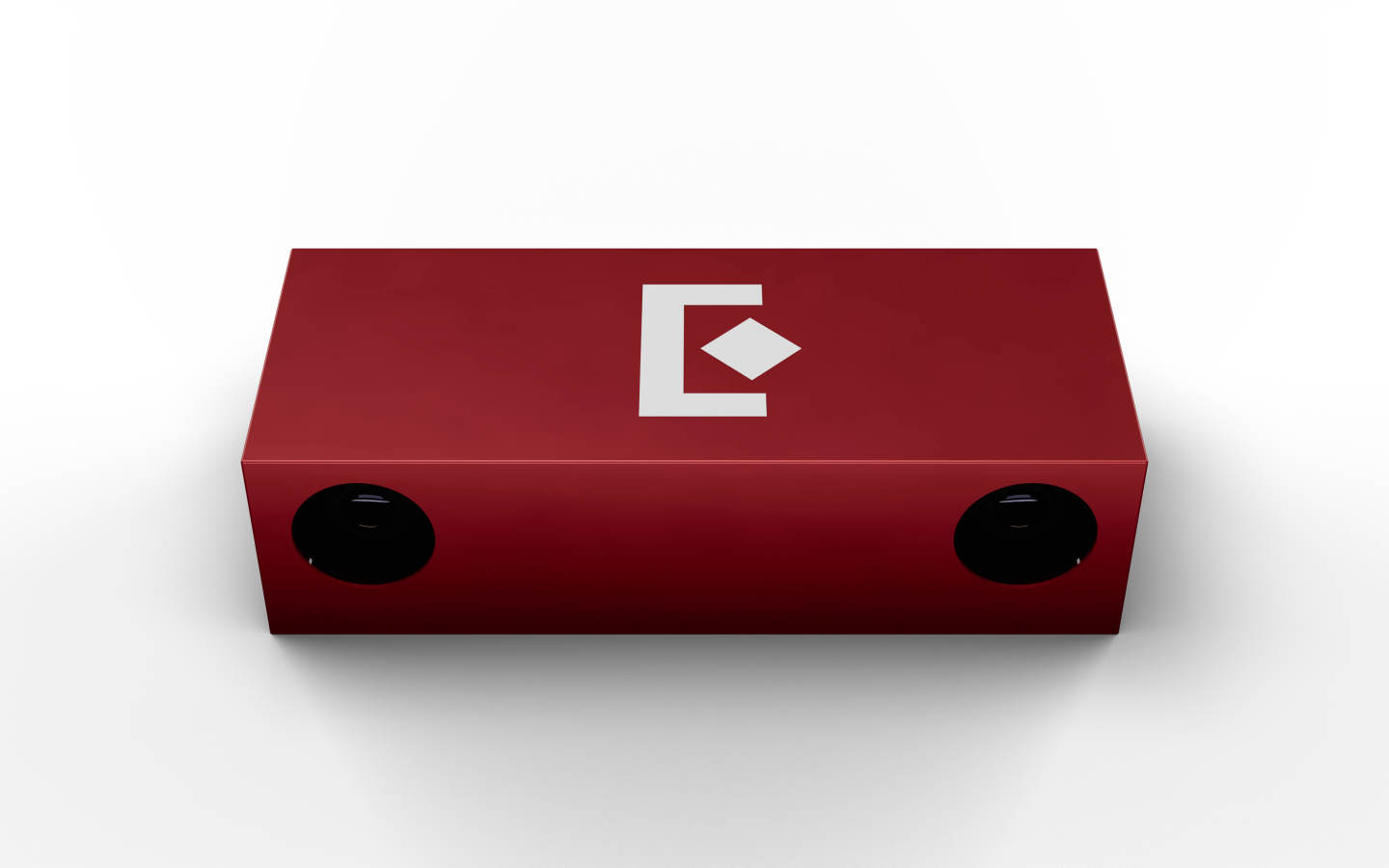
Eureka 3D Camera
99.5%
Picking accuracy
0.2 s
Vision cycle, as low as
30M+
Operations in production
01 — AI StereoVision

AI-powered part detection with
99.5% picking accuracy

High-resolution point clouds give the AI a precise view of every part, for reliable identification and picking.
  1. 1
    Shiny or translucent parts
    Reflective metal and see-through plastic.
  2. 2
    Overlap and bin corners
    Parts stacked on each other or pressed into the corners of the bin.
  3. 3
    Parts that differ from CAD
    The physical part is not exactly as the CAD file.
1.6 MP
Global shutter, up to 1440 × 1080
No laser
Passive AI stereo, no laser needed
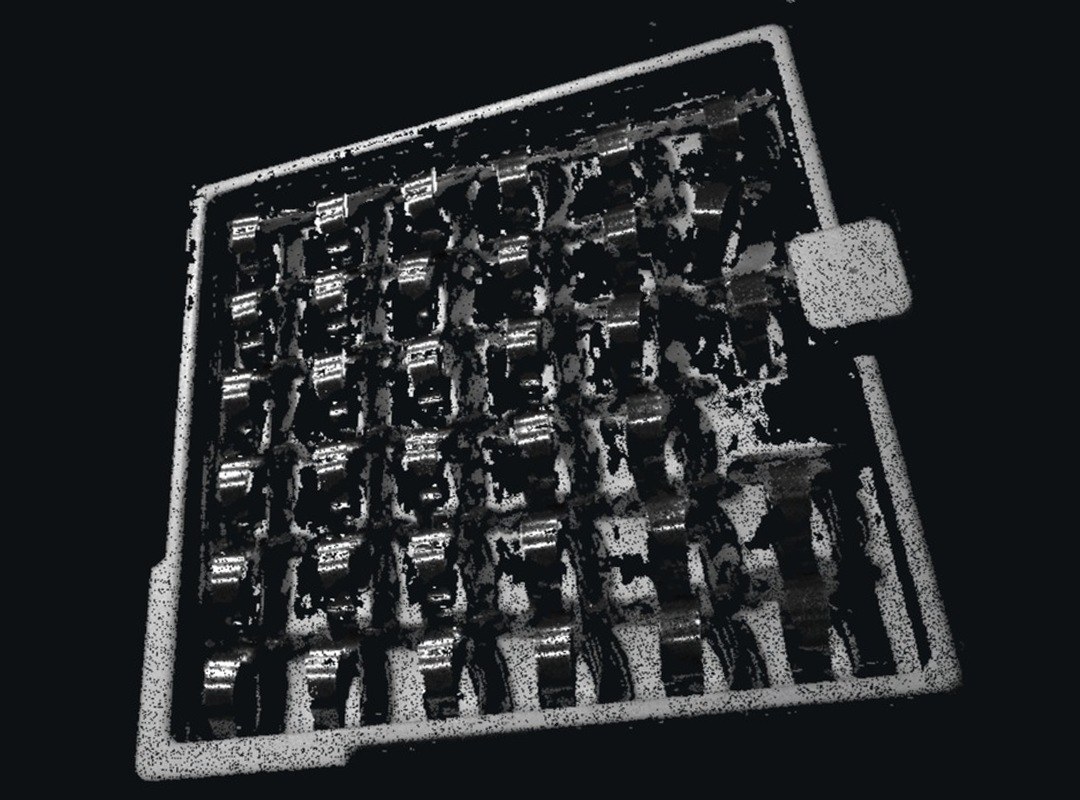
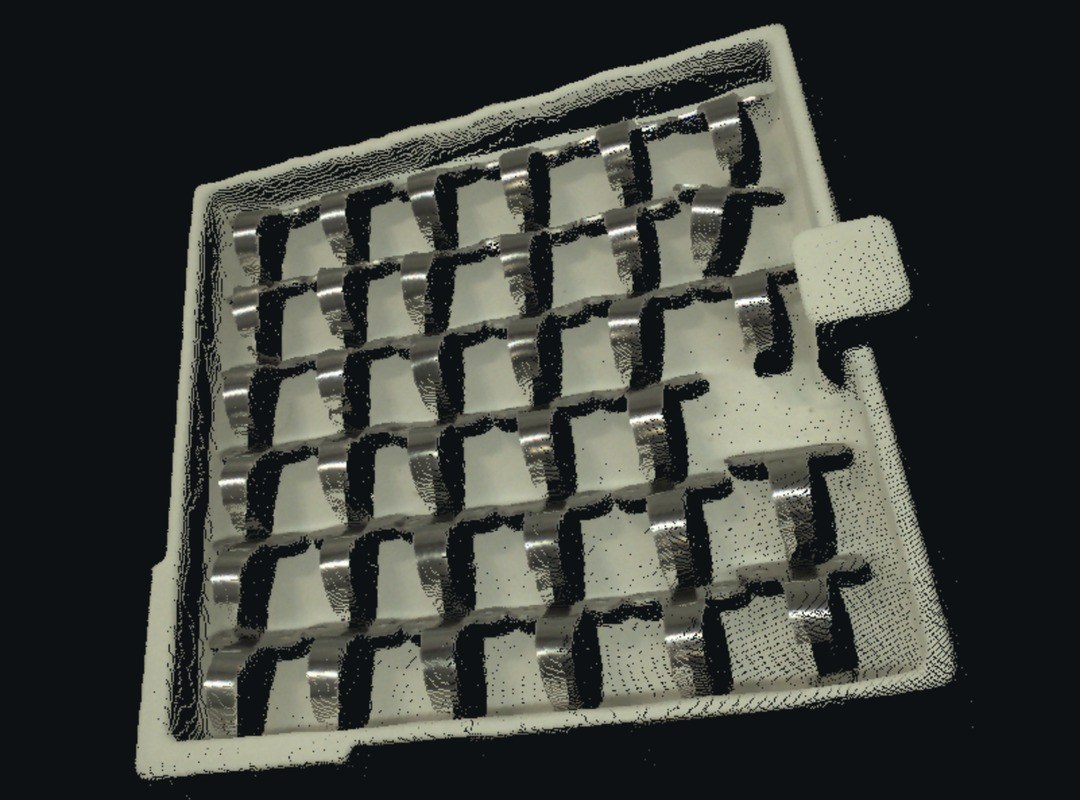
Point cloud of a tray of shiny metal clips from a structured-light camera, with gaps on the reflective surfaces
Point cloud of the same tray from the Eureka 3D Camera, with complete surfaces on the shiny clips
Structured lightEureka AI StereoVision
Same tray of shiny metal clips. Look at the reflective surfaces: the structured-light scan is missing points, AI StereoVision keeps them.
0.2s
Vision cycle, as low as
0s
Effective vision cycle when run parallel to robot motion
02 — Software

Program your 3D vision cell with StereoPick

Intuitive software for 3D picking applications.

Explore StereoPick
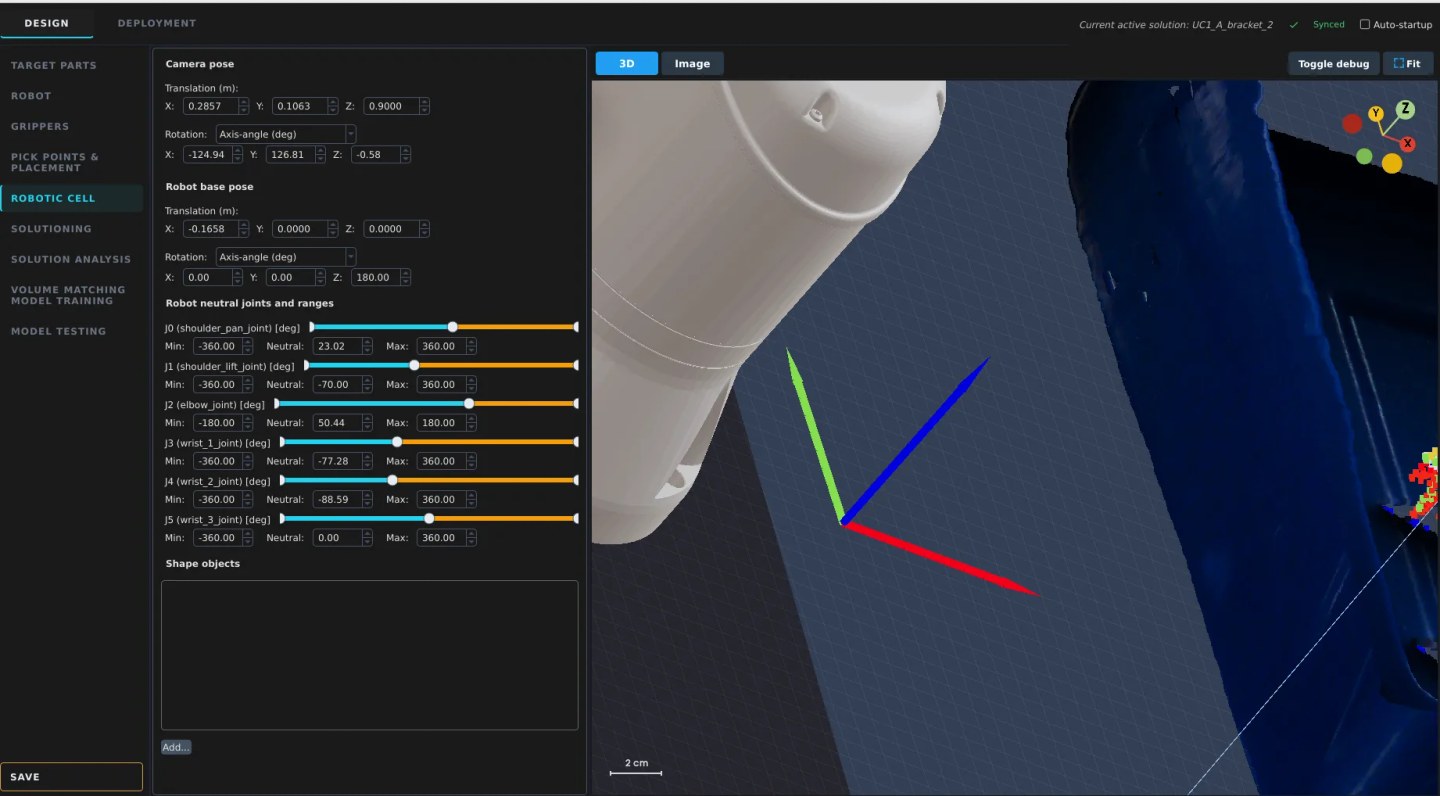
StereoPick robotic cell setup
03 — Models and specs
Working distance
300–600 mm
FOV at min. distance
210 × 188 mm
FOV at max. distance
448 × 376 mm
Lateral resolution
0.17–0.35 mm/px
Expected depth error (calculated)
0.26–1.04 mm
Baseline
120 mm
Size (L × D × H) · weight
160 × 65 × 43 mm · 0.6 kg
Model
Close range
ECA-S-3001
Mid range
ECA-M-3002
Long range
ECA-L-3002
Working distance300–600 mm600–1200 mm1200–4000 mm
FOV at min. distance210 × 188 mm454 × 374 mm917 × 746 mm
FOV at max. distance448 × 376 mm918 × 749 mm3186 × 2486 mm
Lateral resolution0.17–0.35 mm/px0.35–0.69 mm/px0.69–2.3 mm/px
Expected depth error (calculated)0.26–1.04 mm0.80–3.18 mm3.18–35.38 mm
Baseline120 mm156 mm156 mm
Size (L × D × H) · weight160 × 65 × 43 mm · 0.6 kg200 × 65 × 45 mm · 0.9 kg200 × 65 × 45 mm · 0.9 kg
All models
Sensor
CMOS colour, 1.6 MP, global shutter
Resolution · capture time
Up to 1440 × 1080 · 0.1–1.2 s typical
Depth
AI stereo matching, passive (no laser)
Outputs
Colour image, depth map, point cloud, stereo pair
Interface · power
GigE Vision, M12 X-coded · PoE 802.3af, max 15 W
I/O · trigger
M12 8-pin: 1 in, 1 out, 2 GPIO · software, hardware
Environment
0–50 °C · IP55 (test pending)
In the box
Mounting bracket, calibration set, 5 m M12–RJ45 cable
Download datasheet
Fanuc, ABB, UR, AUBO out of the box · open APIEvery model: fixed or robot-mountedOne PoE cable: power and data
04 — Mounting

Mounts to the robot or above the bin

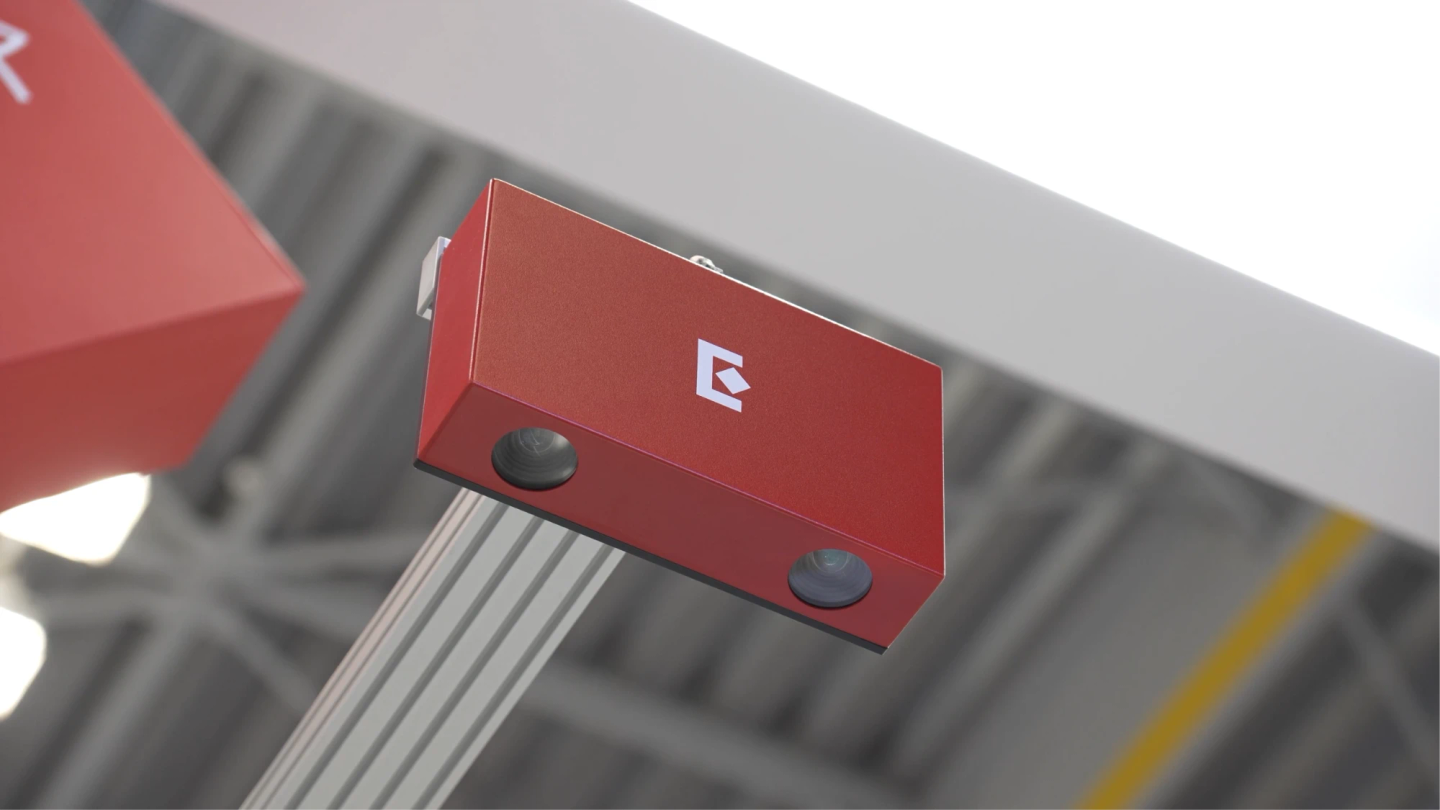
Eureka 3D Camera fixed above the bin on an aluminium extrusion
Fixed mount

Above the bin

  • Captures while the robot moves, so vision adds no cycle time
  • One view covers the whole bin
  • No camera cable on the robot arm
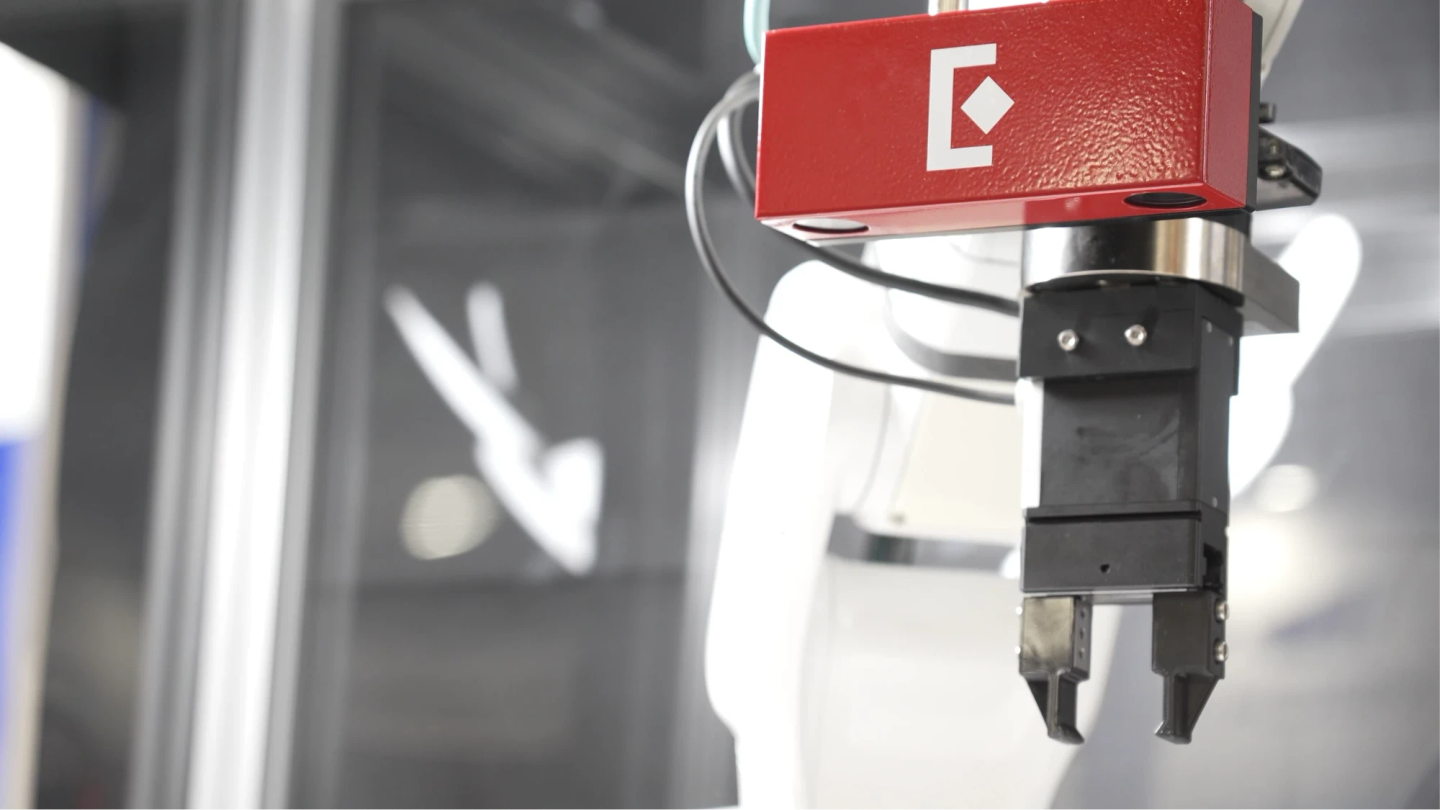
Eureka 3D Camera mounted on the robot wrist above a gripper
Robot-mounted

On the robot hand

  • Higher precision from a close-up view
  • Looks at parts from several angles to find more picks
  • Pauses the robot while it captures
Plain, textureless parts?

Add the optional pattern projector. It gives the stereo pair texture to match on, with no laser.

Compatible with
all major robot brands

Your robot program asks for the next pick and gets back where to grab it. Everything runs on-site on the Eureka Controller, with no cloud connection and no subscription.

Integrated out of the box
Any other robotvia open API
05 — Comparison

AI Stereo vs. other 3D methods

Depth from
AI Stereo
Two images, matched by AI
Structured light
Projected light patterns
Time-of-flight
Travel time of emitted light
Shiny parts
AI Stereo
Handled well
Structured light
Glare leaves gaps in the data
Time-of-flight
Reflections distort depth
Transparent parts
AI Stereo
Some today, improving with updates
Structured light
Pattern scatters
Time-of-flight
Light passes through
Matte, opaque parts
AI Stereo
Accurate enough for most picking
Structured light
Most accurate (sub-mm)
Time-of-flight
Lower depth detail
Gets better over time
AI Stereo
Yes, AI models improve with software updates
Structured light
Fixed by the optics
Time-of-flight
Fixed by the sensor
AI Stereo
Structured light
Time-of-flight
Depth fromTwo images, matched by AIProjected light patternsTravel time of emitted light
Shiny partsHandled wellGlare leaves gaps in the dataReflections distort depth
Transparent partsSome today, improving with updatesPattern scattersLight passes through
Matte, opaque partsAccurate enough for most pickingMost accurate (sub-mm)Lower depth detail
Gets better over timeYes, AI models improve with software updatesFixed by the opticsFixed by the sensor

Talk to sales

Pricing, system configuration and lead times.

Find an integrator

Work with a Eureka-trained integrator in your region to deliver the full cell.