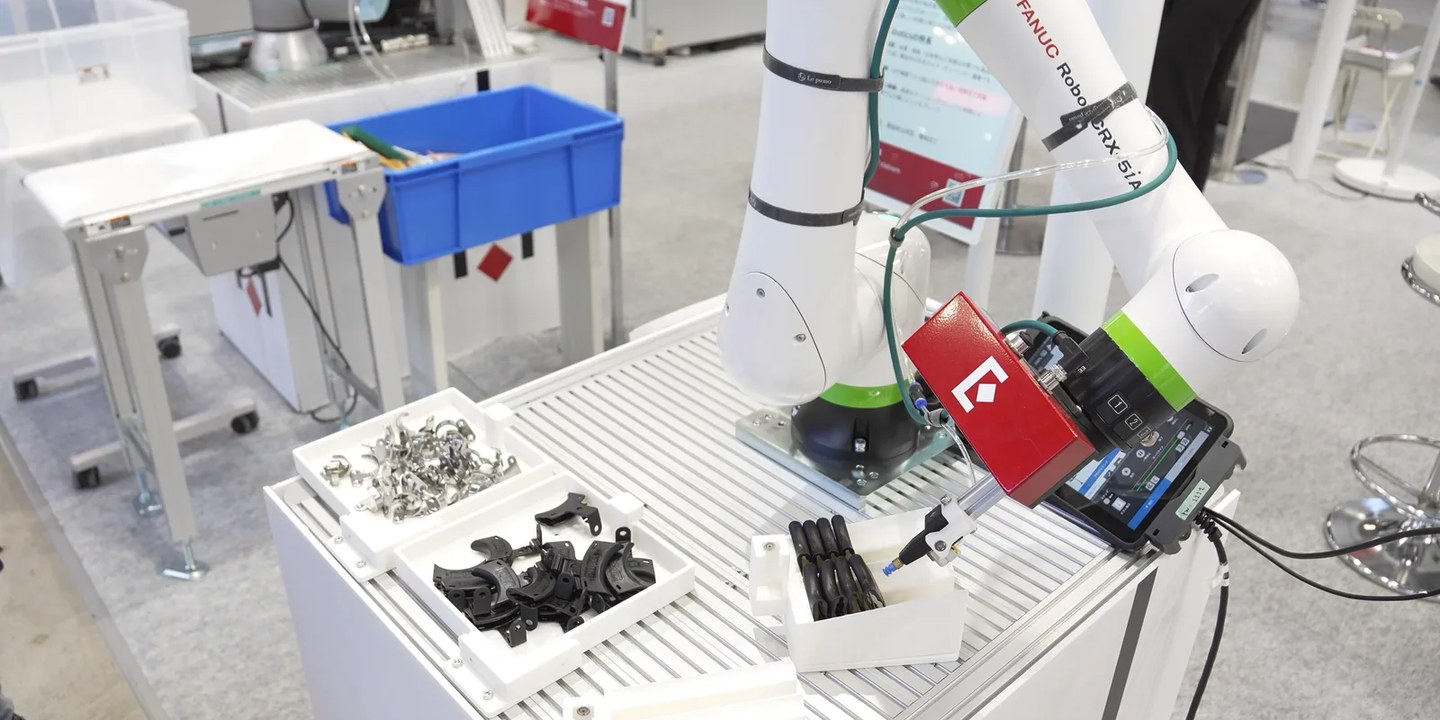
If you've read our field guide and our piece on machine learning in bin picking, you have a solid understanding of what bin picking systems do, what makes them work, and where they break. This article is about the next step: buying one.
The bin picking market has grown considerably, but it hasn't simplified. The number of vendors has increased, product categories have blurred, and the language used to describe capabilities (particularly anything involving "AI") has become less reliable as a signal of what you're actually getting.
What follows is a buyer-side guide to navigating that landscape.
The vendors offering bin picking solutions
The complexity in bin picking doesn't live in any single component. It lives in the interplay of 3D camera, robot arm, AI software, and end-effector, all working together under real factory conditions. That means vendors offering an integrated approach, where the camera, software, and controller are designed to work together, are significantly easier to implement than piecing together hardware from different suppliers. With an integrated vendor, one team is responsible for making it all work. With three or four separate companies, that responsibility falls on you.
The most prominent names in the space include Eureka Robotics, Photoneo, Mech-Mind, Keyence, Apera, and the vision divisions of major robot manufacturers like FANUC.
Most providers, including Eureka, are robot-agnostic and support standard communication protocols like EtherNet/IP, TCP/IP, and Modbus. That said, not all robot platforms are equally open. If your robot or PLC software is outdated or proprietary, budget additional integration time. Confirming protocol compatibility early avoids one of the more common sources of delay.
How vision vendors differ
Production readiness
On paper, the vendors listed above offer broadly similar capabilities. At the fundamental level, each provides a vision system that allows you to pick and place randomly positioned parts under varying conditions: different lighting, different part orientations, different bin fill levels.
What actually sets vendors apart is how easy the system is to implement and how quickly you can get it to a reliable, production-ready state.
This is where we believe Eureka has a meaningful advantage. Our masterless AI model can pick parts with simple geometries without any training — no CAD data submission, no weeks of model training, no annotated image sets. For common part geometries, the system works out of the box. For more complex parts, fine-tuning is fast and can often be done in a matter of hours. Full deployment, from first pick to stable production, typically happens within weeks, not months. More on this in our bin picking field guide.
How 3D vision technologies differ
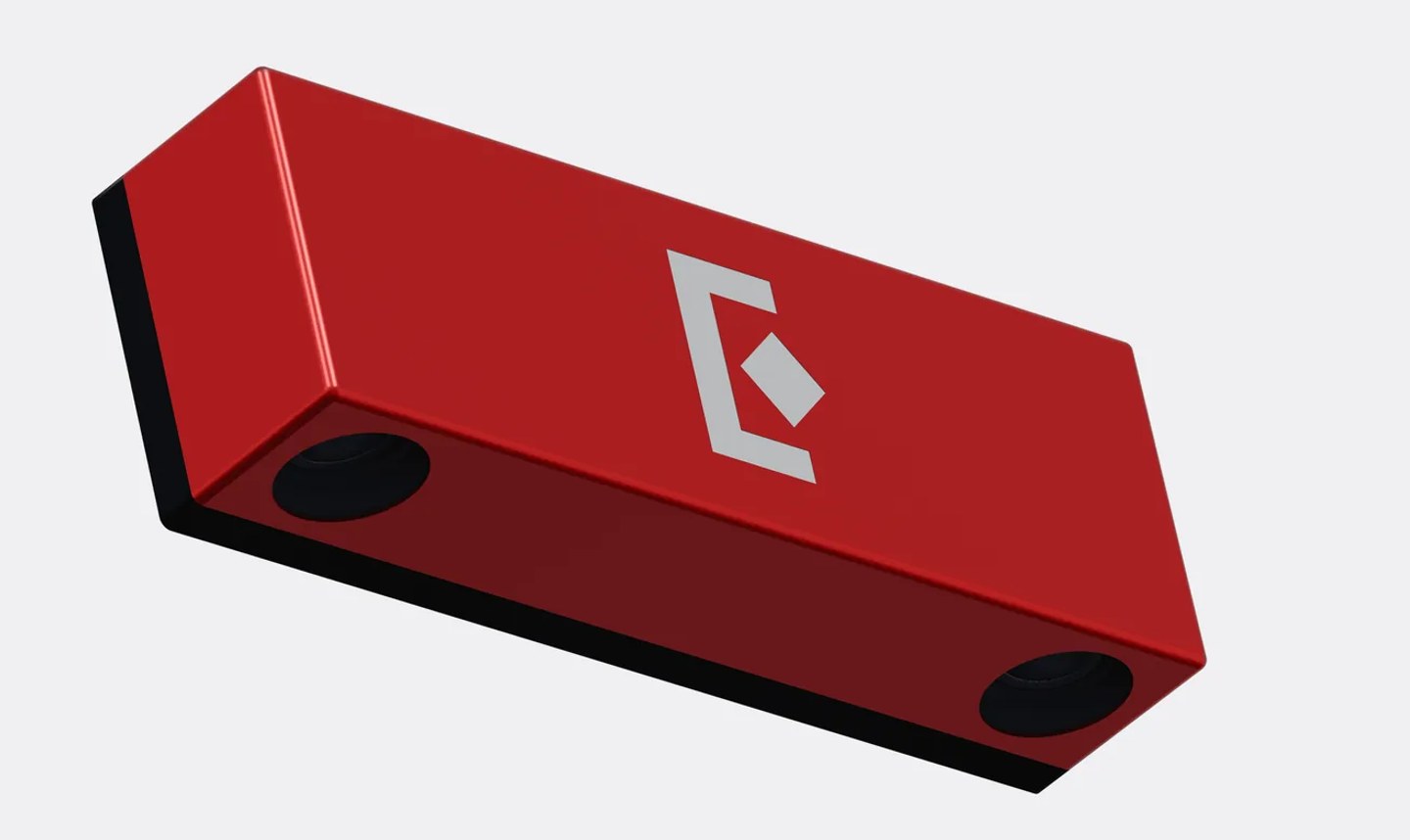
Under the hood, not all 3D cameras work the same way, and the differences have practical implications for cost, robustness, and long-term upgradeability.
For most of bin picking's history, time-of-flight and structured light cameras were the dominant approaches because stereo vision, while simpler in hardware, relied on stereomatching algorithms that were too brittle for production.
Machine learning has changed that equation. ML-based stereomatching, trained on massive datasets, now solves the matching problem reliably and fast, making stereo vision the technically superior and more cost-effective approach. That's why most vendors in the space, including Eureka, have moved to stereo vision.
| Time-of-flight (ToF) | Structured light | Stereo vision | |
|---|---|---|---|
| How it works | Emits light pulses, measures return time to calculate depth | Projects patterns onto scene, triangulates from deformed pattern images | Two 2D cameras triangulate depth from matched pixels |
| Resolution | Lower (electronics limit pixel density) | Good | Good (with ML-based stereomatching) |
| Hardware complexity | Complex (precision timing electronics) | Complex (projector + camera, alignment-sensitive) | Simple (pair of 2D cameras) |
| Robustness | Moderate | Moderate (projector is an additional failure point) | High (fewer components) |
| Cost | Higher | Moderate to higher | Lower |
| Software upgradeability | Limited (performance tied to hardware) | Limited (performance tied to hardware) | High (AI models improve via software updates) |
Sensing technology is only one input to a camera decision. Our guide to the best 3D cameras for bin picking covers the rest: how to size field of view and working distance to your own bin, why a vendor’s “working distance” and “optimal working distance” are different promises, and why published accuracy figures from different vendors cannot be compared directly.
Commercial models and long-term costs
The pricing models you'll encounter range from upfront CAPEX purchases to subscription-based or per-pick fees. While some vendors push recurring revenue models, the reality in manufacturing is that customers overwhelmingly prefer CAPEX.
Most Eureka Robotics customers buy the system outright and optionally subscribe to an Annual Maintenance Contract that covers software updates and support.
Where total cost catches buyers off guard:
- The full system scope. A bin picking system is not just the 3D camera and the software. It's also the robot, the gripper, mechanical structures, electrical panel, and safety components. All need to be budgeted.
- Integration and ramp-up labor. The engineering work to build the application and get it to stable production is more variable than the hardware cost and harder to predict, particularly for complex parts or tight cycle times. This is the line item teams most consistently underestimate.
- Adding new SKUs over time. Some systems require vendor involvement, CAD data submission, or paid retraining for every new workpiece. Those dependencies compound over time into significant operational cost. Our systems are designed to let customers train similar new workpieces independently, which substantially lowers the long-term cost of SKU changes, though it does require an initial investment in training the customer's team.
Total system cost varies widely depending on the robot, the complexity of the cell, and the integration scope. For the vision system itself, meaning the 3D camera, controller, and associated engineering time, expect a range of $30,000 to $60,000. Our field guide covers the full scope and typical timelines for a complete cell.
Hiring an integrator or going DIY
Why you probably need an integrator
Unless you have a strong internal engineering team with mechanical, electrical, and software capabilities, bring in a system integrator.
A good integrator brings three things: the mechanical and electrical capability to build the cell, the hands-on experience to troubleshoot during installation, and the local presence to provide first-line support after go-live. If they have prior bin picking experience, that accelerates the project. If they don't, that's manageable — what matters more is willingness to learn, solid engineering fundamentals, and good communication.
How Eureka supports integration
Eureka's application engineering team has deep end-to-end experience with bin picking systems and actively supports integrators through the process. We don't perform integration ourselves, because product development and system integration are fundamentally different businesses, but we use our knowledge to guide integrators through setup, commissioning, and ramp-up.
We also maintain a network of integration partners with strong vision and bin picking experience, and we're happy to connect you with a qualified integrator in your region. Contact us if you'd like an introduction. If you're a system integrator looking to add vision-guided bin picking to your portfolio, we'd like to hear from you as well.
For a detailed breakdown of what integration actually involves and how long it takes, see the cell design and integration sections of our field guide.
Where to start
If you're at the evaluation stage and want to understand what's feasible for your specific parts and process, the most productive next step is a lab demo with your actual parts. It surfaces the real engineering questions early, gives both sides a shared understanding of the application, and produces enough information for a realistic project proposal.
We offer complimentary lab trials for this purpose. Get in touch.