Handling thin lenses without damage
Small glass lenses for optical fibers are difficult to handle reliably: they are thin, arrive in varying orientations and can be scratched or broken by an incorrect pick. The precision required has traditionally kept the work manual, while demand for 5G components calls for production volumes that are difficult to sustain that way.
From the basket to the cleaning jig
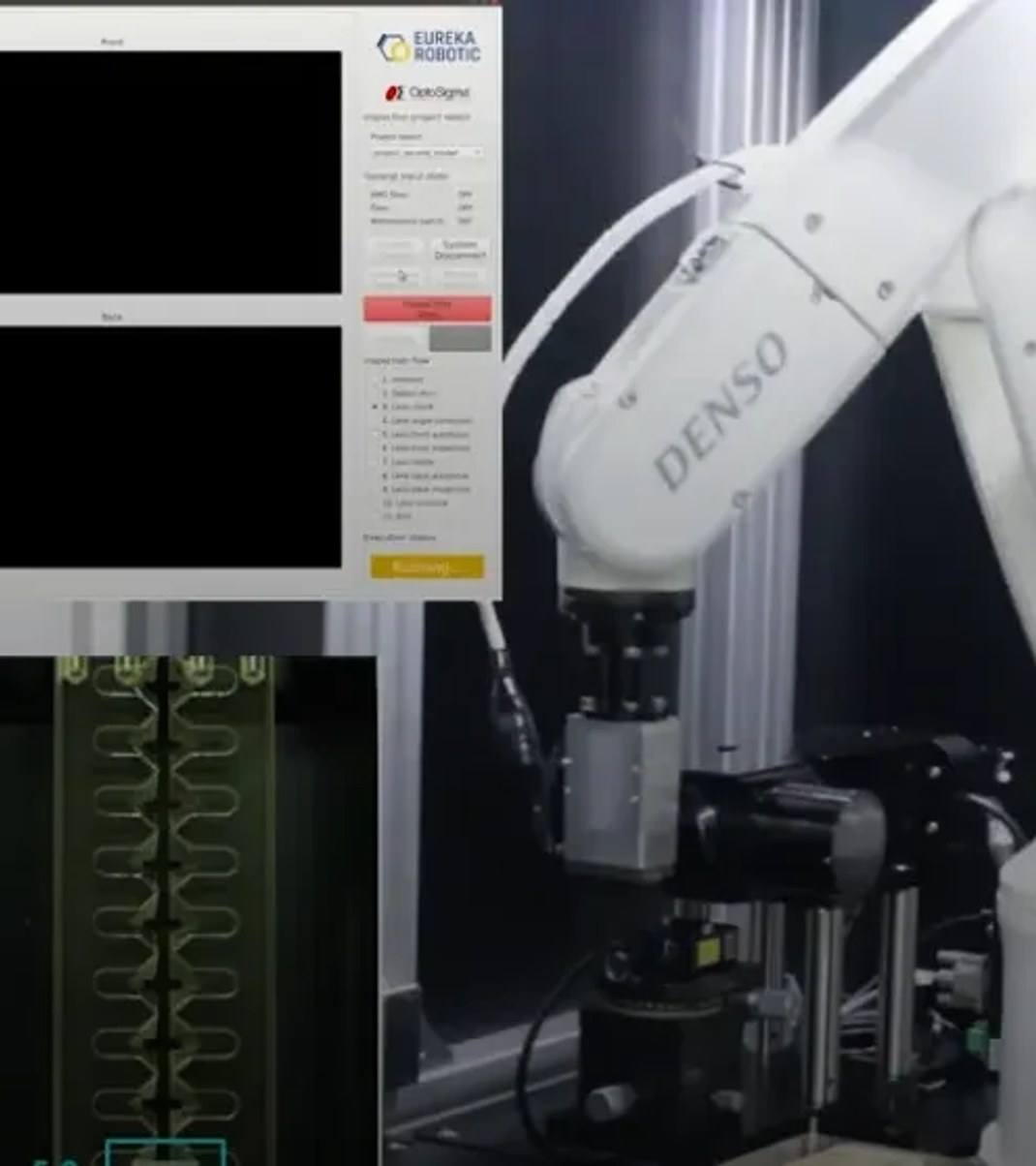
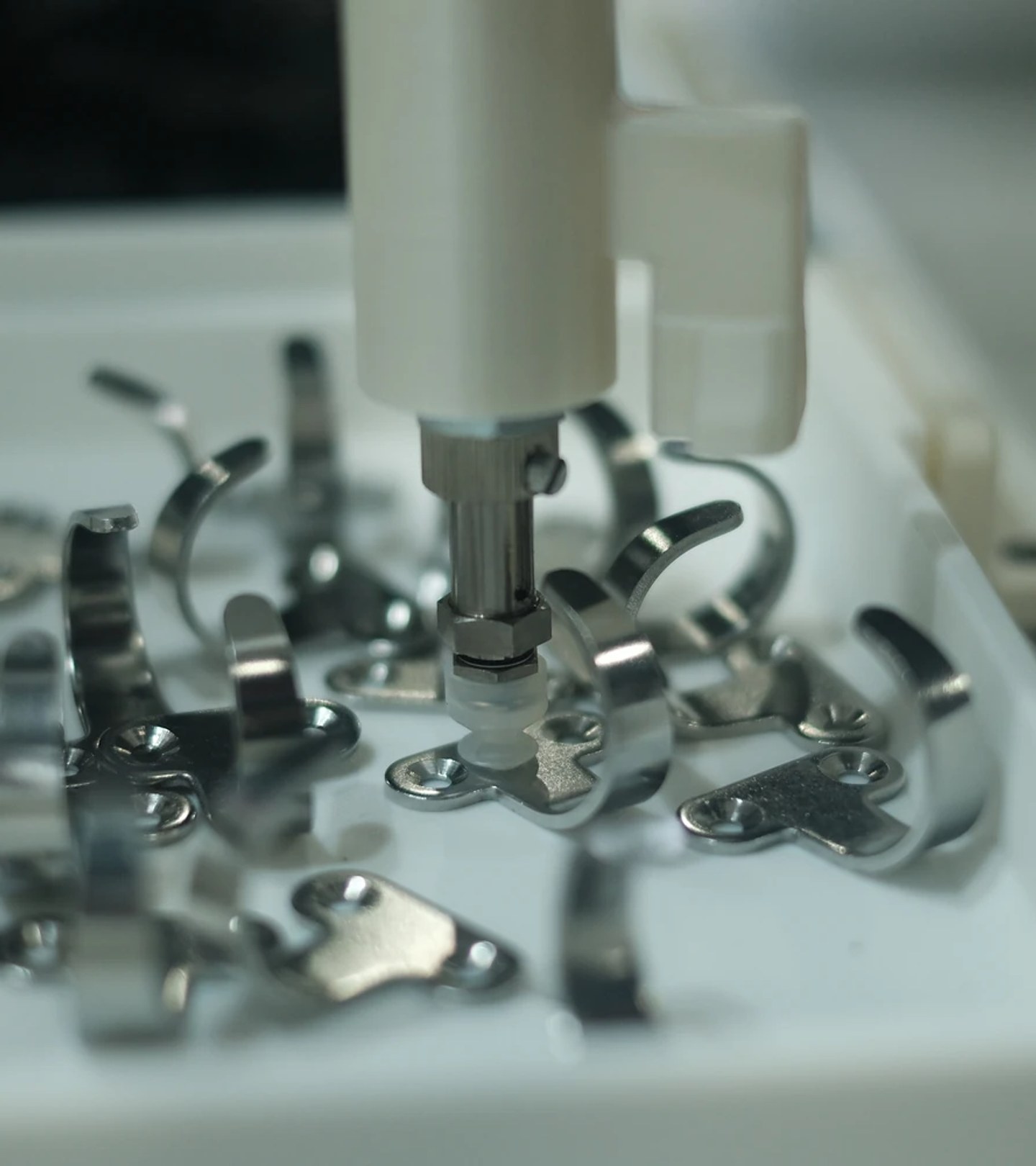
Pytagoras uses 2D image recognition to locate the plano-convex lenses in a basket despite their random positions and orientations. The robot picks each lens individually and inserts it into a cleaning jig.
The application reports 0.2 mm insertion precision at the jig-loading step. After cleaning, the robot places the lenses in shipping boxes with 0.5 mm positional accuracy, ready for shipment.
Cycle time and production capacity
The reported cycle is four seconds per lens, equivalent to 900 lenses per hour. Automated picking and placement reduce dependence on skilled manual handling while helping maintain consistent quality and limit damage. The application supports high-volume production of optical components for 5G infrastructure and provides a basis for scaling capacity.