From random presentation to inspection
Manual inspection can vary with operator experience and condition, making small scratches and dents easy to miss. Rising labor costs and long inspection cycles add pressure to automate, but irregular workpieces arrive in different positions and orientations.
The Eureka 3D Camera generates point clouds without projecting a pattern, supporting recognition of complex shapes and glossy or reflective surfaces. The Eureka Controller uses this information to select a grasp and plan the robot’s path.
Coordinating the cell through one interface
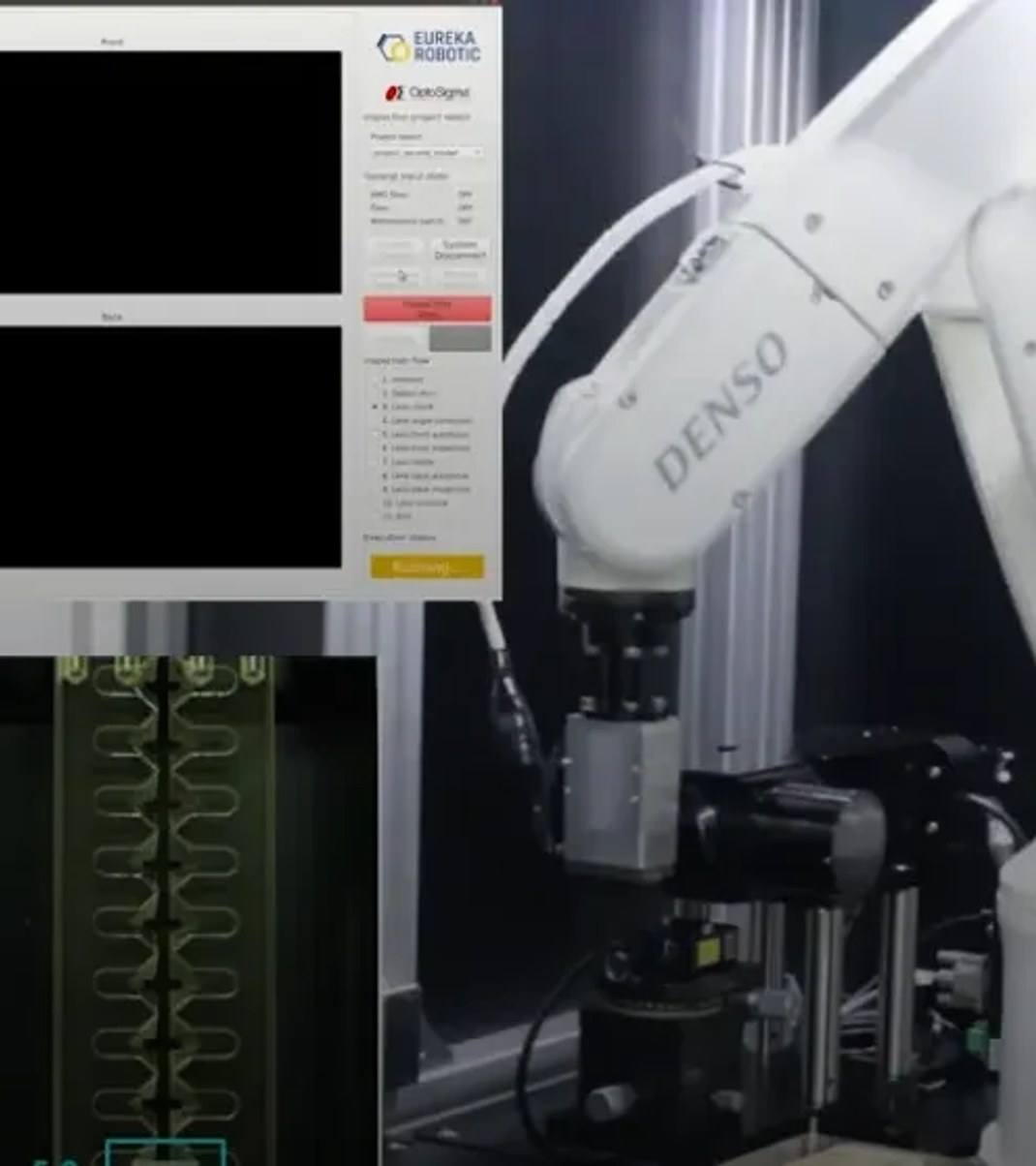
The controller provides a common interface for robots, 3D and 2D cameras, human-machine interfaces and peripheral equipment. It synchronizes the cameras and robot through picking, left/right classification and visual inspection.
Custom AI models identify small scratches and dents and can be trained without writing code. The inspection models perform the defect check, while the 3D camera supplies the spatial information needed for picking.
Inspection results
The reported results include sub-millimeter defect detection, more consistent inspection, shorter inspection times and lower labor costs. The application brings irregular-part handling into the same automated workflow as classification and quality inspection, reducing dependence on manual checks.